
Circular Economy
Resource Conservation and Recyclability
Basic Policies
The FUJI Group is promoting initiatives toward the realization of a circular economy by developing environmentally friendly products and pursuing waste-free production.
Initiatives in the logistics process
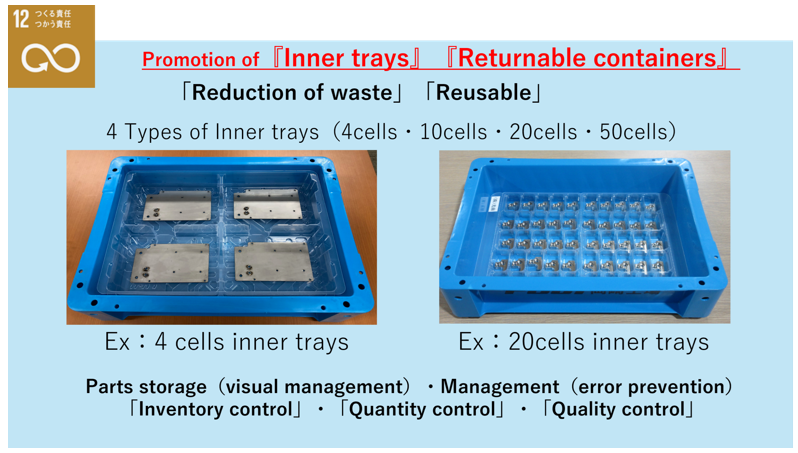
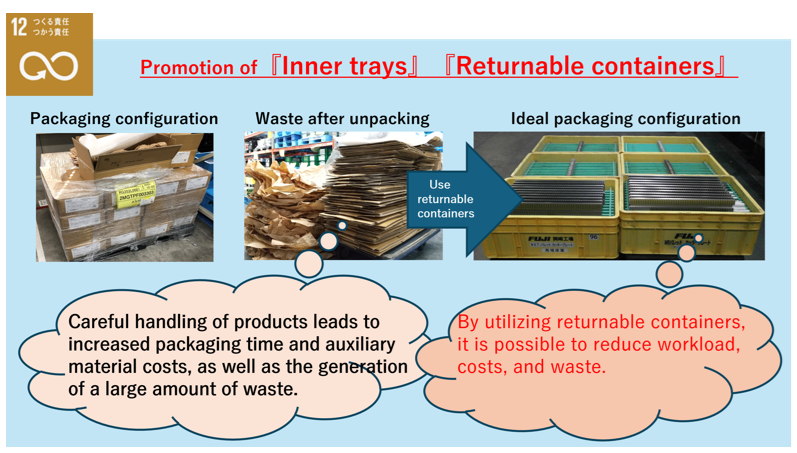
Initiatives in the production process at the machining factory
- Tool regrinding
Tools are reused multiple times through regrinding.
- Recycling of carbide tools that can no longer be reground
Used carbide tools, made from valuable rare metals, are not discarded but are handed over to specialized companies and recycled into new cutting tools.
- Reuse of lubricating oil
A pilot test to reuse used lubricating oil by passing it through a filtration system has been launched in April 2026.
- Extending the service life of coolant fluid
A pilot test utilizing a nanobubble generation system has been launched in April 2026.
Effective Use of Water Resources
Basic Policies
The Fuji Group recognizes water as a vital resource essential to the realization of a sustainable society and regards its proper use as a key environmental challenge.
We are committed to reducing water consumption and improving water use efficiency, and will continue to strengthen these efforts.
Starting in fiscal year 2023, the scope of data collection has been expanded to include all Fuji Group production sites (Fuji (Headquarters, Toyota Plant, Okazaki Plant), Adtek Fuji, Edec Linsey System, Fasford Technology, Fuji Linear, and Kunshan Fuji). Regarding measures to address water pollution, the scope of data collection is limited to Fuji alone (Headquarters, Toyota Plant, and Okazaki Plant). Going forward, we will gradually expand this initiative to cover the entire Fuji Group and work to improve environmental data management.
Water risk assessment at production sites
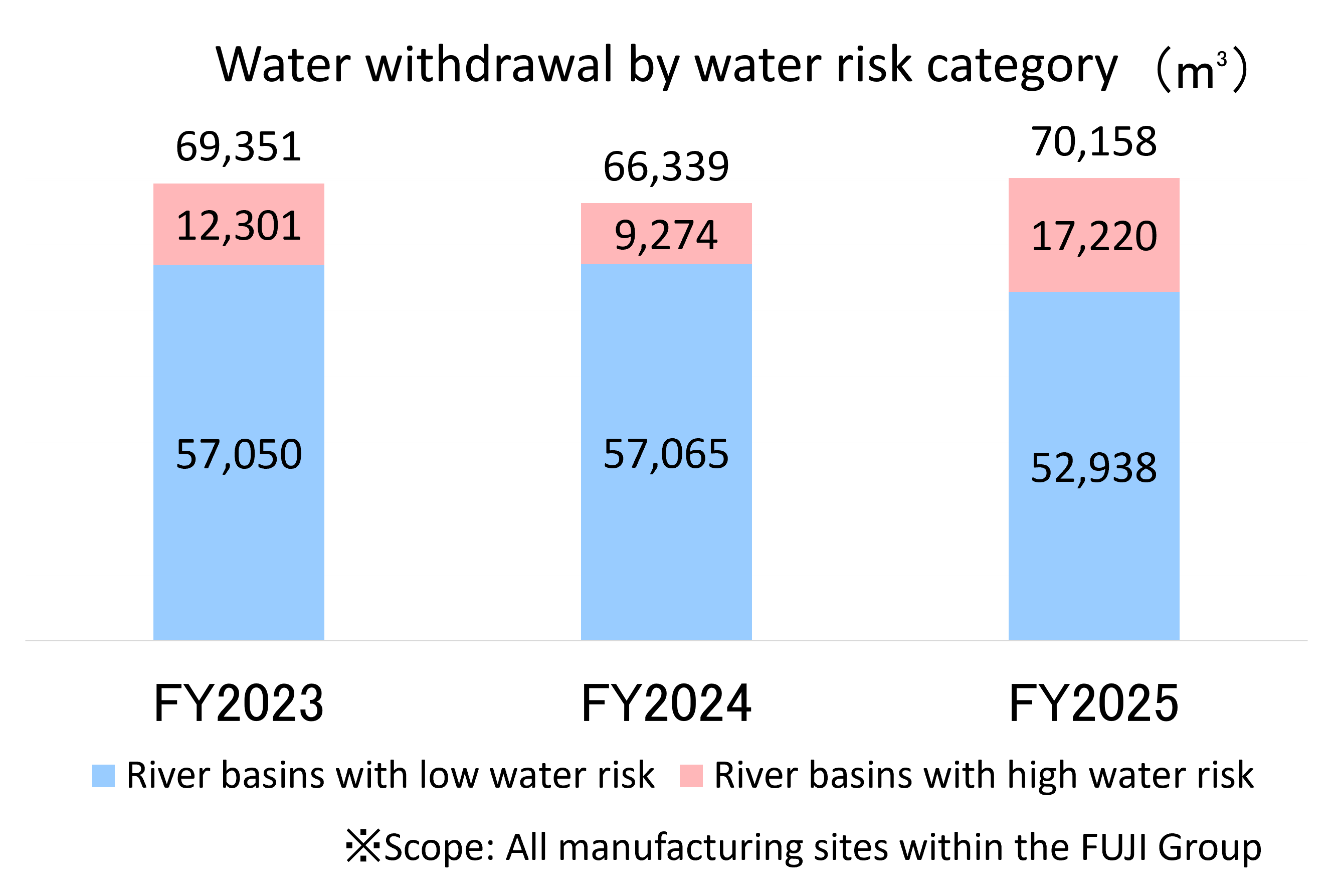
We conducted a water risk assessment of our production sites using the Aqueduct Water Risk Atlas provided by the World Resources Institute (WRI). According to the fiscal 2025 assessment, our site in China was identified as being located in a region with a high level of overall water risk. Only one site was identified as being located in such a high-risk region. Only one site was identified as being located in such a high-risk region.
In fiscal 2025, a new factory is being constructed in China to strengthen production capacity. As a result of the associated increase in headcount, water usage in water-stressed regions has increased.
Water intake and discharge volumes at production sites
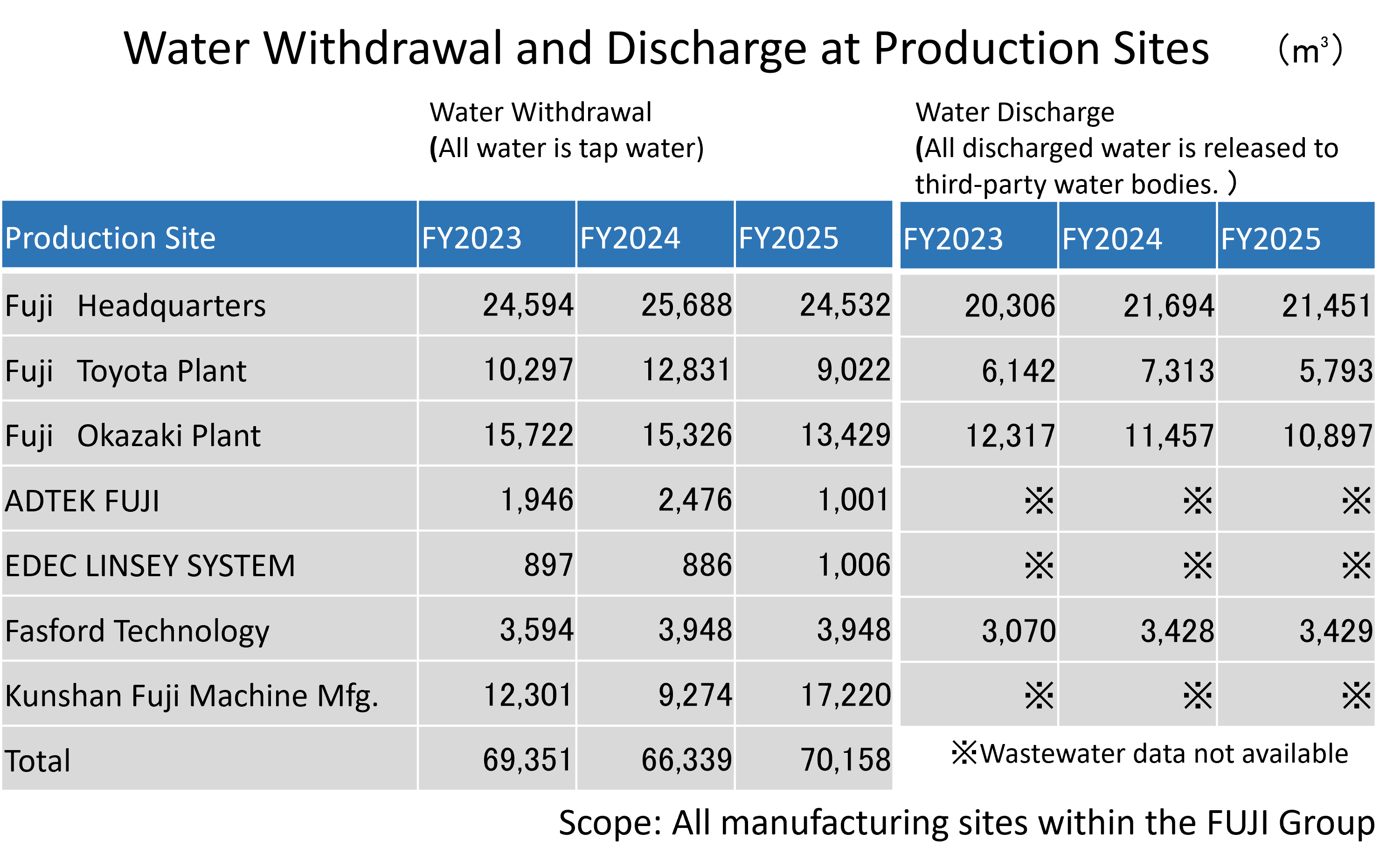
We purchase tap water from public water facilities and use it mostly for daily activity purposes. Purchased water and water discharge volumes for each production site are as follows.
Water consumption reduction targets and initiatives

We aim to reduce water consumption by 3% by fiscal 2031 compared to fiscal 2025 levels.
- Raising awareness of water conservation through poster campaigns
- Introducing water-saving toilets
- Installing faucets that automatically shut off after a certain period
- Collecting rainwater and using it for watering lawns within the premises
The Fuji Group is working to reduce water usage with the aim of promoting efficient use of water resources and minimizing environmental impact. Examples of these initiatives are as follows.
As part of our future initiatives, we plan to install additional water-saving toilets in fiscal 2026.
In accordance with our environmental roadmap, we plan environmental investments and will promote the installation of water-saving equipment to achieve our 2030 water reduction targets. We will continue to advance the efficient use of water resources and strive to reduce environmental impact.
Response to water pollution
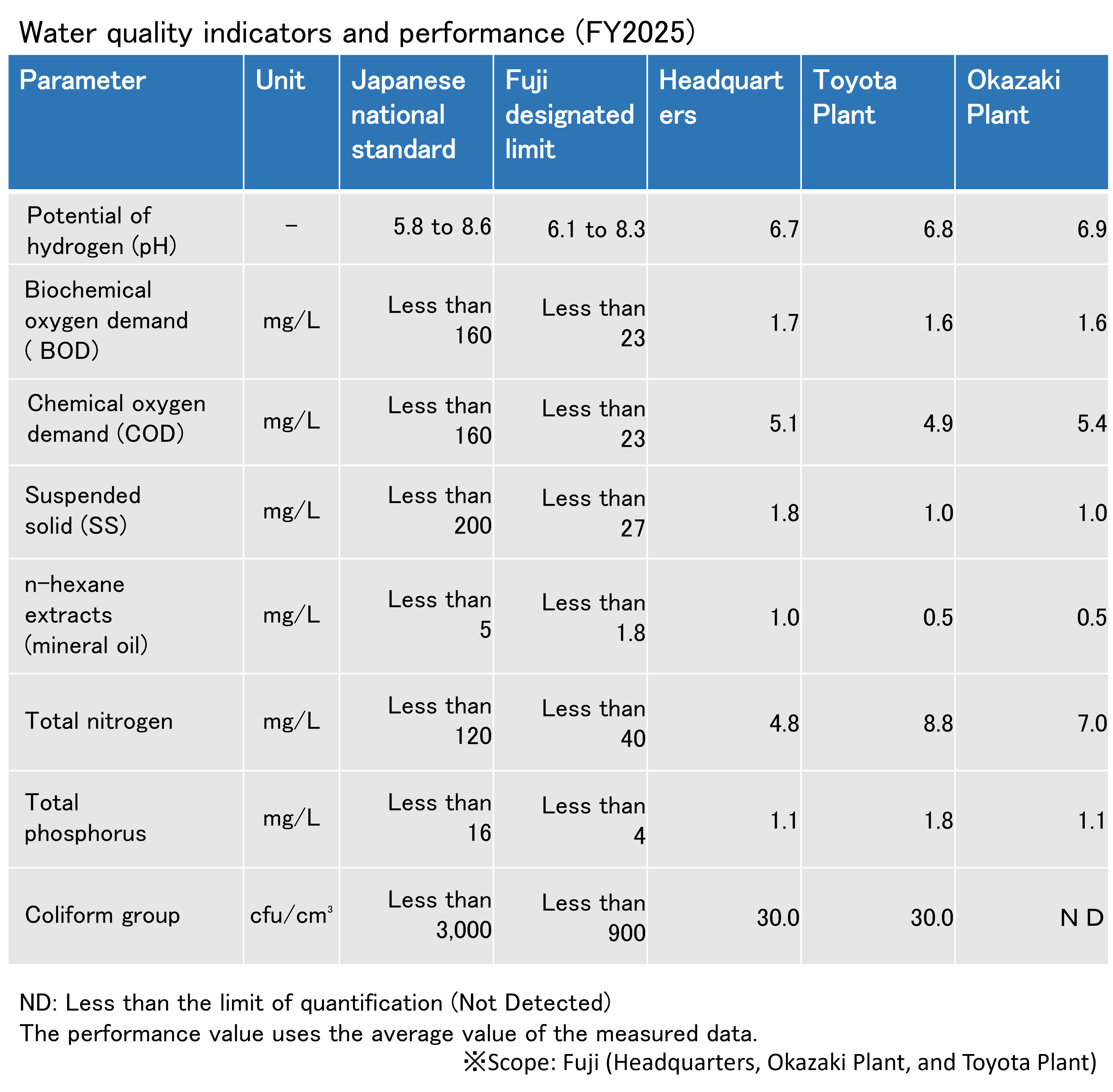
In consideration of aquatic ecosystems, we have established our own management standards, which are more stringent than Japanese regulatory standards, to control wastewater discharged from our plants. Our water quality inspection in fiscal 2025 showed we have not exceeded our designated limits for all categories. We will continue to manage the discharge of wastewater to reduce the environmental impact on local communities.


Facing challenges drives the future.
DNA that never stops evolving.
Human stories woven through technology.